Blog Home
KeySavvy vs. cash, checks, and wire transfers
The best way to accept payment for a private party car sale

Introduction
Selling a car involves the transfer of a significant amount of money, which understandably makes people nervous. This article gives a clear-eyed comparison of the popular options available.
Major concerns
The best payment method when selling a car is one that:
- protects both you and your buyer from fraud
- is convenient
- doesn't have a high transaction fee
As a seller, you need a mutually trusted way for your buyer to pay. Otherwise, you'll have a harder time selling your car.
Traditional payment methods like cash, wire transfers, and cashier's checks are viable methods, but they each have limitations and involve some serious risks. KeySavvy is specifically designed for vehicle transactions, bringing convenience and security to the process.
Overall comparison
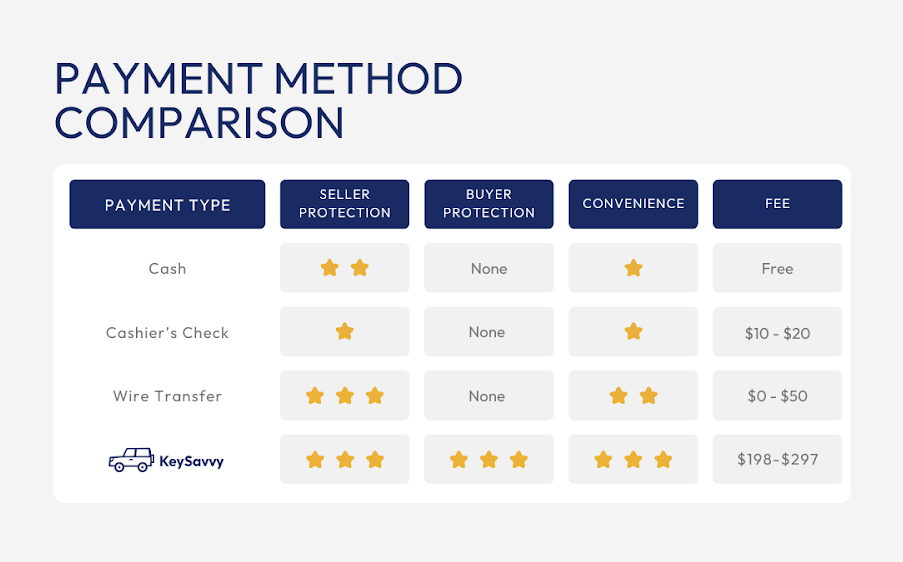
The table below compares common payment methods. "Seller Protection" is determined by how easily a payment method can be counterfeited and "Buyer Protection" is determined by how easily title fraud can occur.
Note: fees for cashier's checks and wire transfers depend on specific banks' policies; KeySavvy's fees are flat regardless of the vehicle's sale price.
Verifying a payment
Verification is an important part of accepting any payment securely. Without a rigorous process, you risk being defrauded of your payment. Here are some strategies.
Cash
Counterfeit money is out there and more common than you may think. If you accept cash, you should meet at your bank and deposit it immediately. Bank staff are trained and have equipment to detect counterfeit money. You will also mitigate the threat of being robbed of your money (or misplacing it).
While it is inconvenient to have to arrange such meetings during the bank’s hours, this is the safest way to accept cash.
 Steven Gin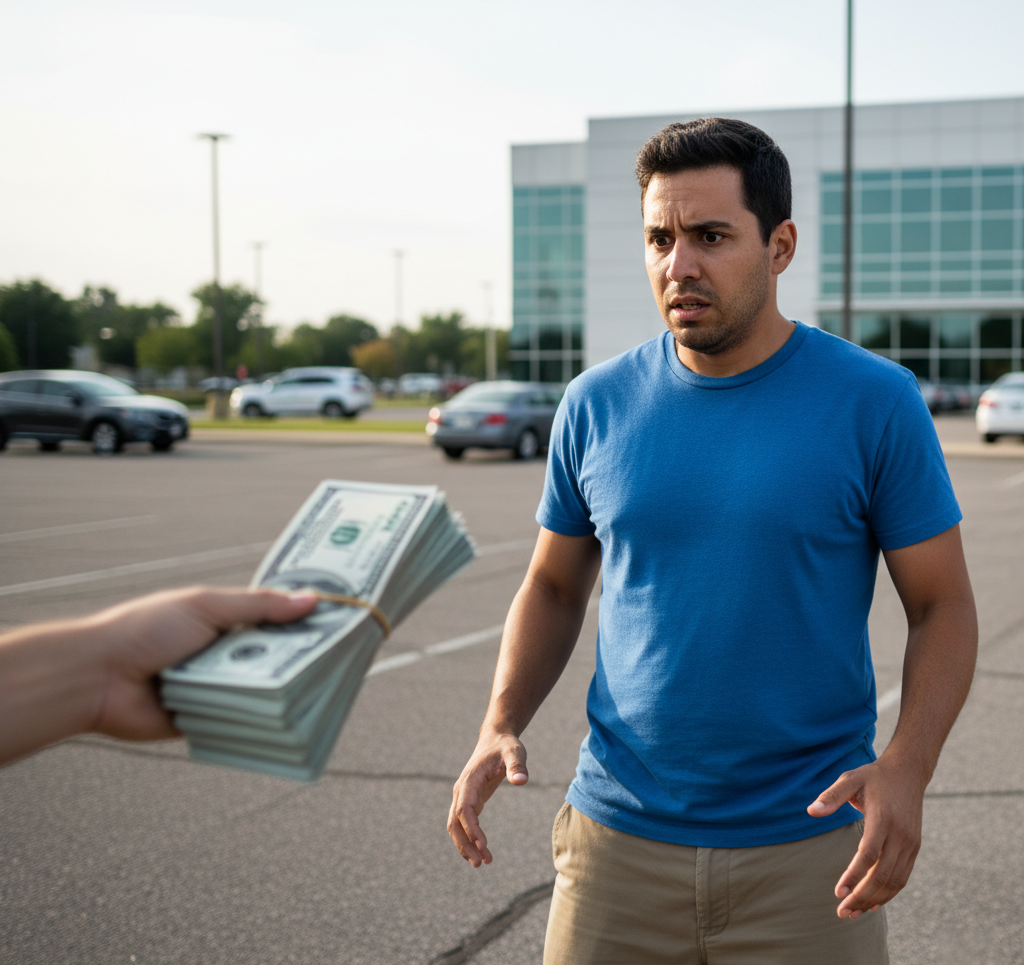
Cashier’s Checks
Cashier’s checks are easier to fake than cash and very hard to verify—even banks can take weeks to find the problem. For that reason, if you accept a cashier's check, you should meet at the buyer's bank and have the teller hand the check directly to you. You can rest assured that the funds will clear, but again this is a hassle to arrange.
 Steven Gin
Wire transfers
A wire transfer cannot be counterfeit or reversed. When selling your car, if you receive a wire transfer, then you can be confident the funds are in your account and are legitimate. You'll need to share your bank account and routing number with your buyer to pay you with a wire transfer.
The biggest problem with wire transfers is how slow they are, which causes major friction and trust issues in the sale. To illustrate:
- Buyer initiates wire transfer at their bank during bank hours.
- Banks often hold outgoing transfers for 1-2 business days for verification.
- Once verified, the wire takes at least 1-2 hours before it arrives in the seller’s account.
- While waiting for the transfer to arrive, seller won’t want to give the vehicle to buyer, but the buyer's money is already gone from their account.
- Buyer needs to trust that seller will hand over the vehicle once paid. This can be very hard for the seller to establish.
Your buyer needs to be comfortable too
Getting a wire transfer might be the best option for you as a seller, but savvy buyers will hesitate to pay you that way and your car sale can take longer. In fact, none of the payment methods above protect the buyer from title fraud.
 Steven Gin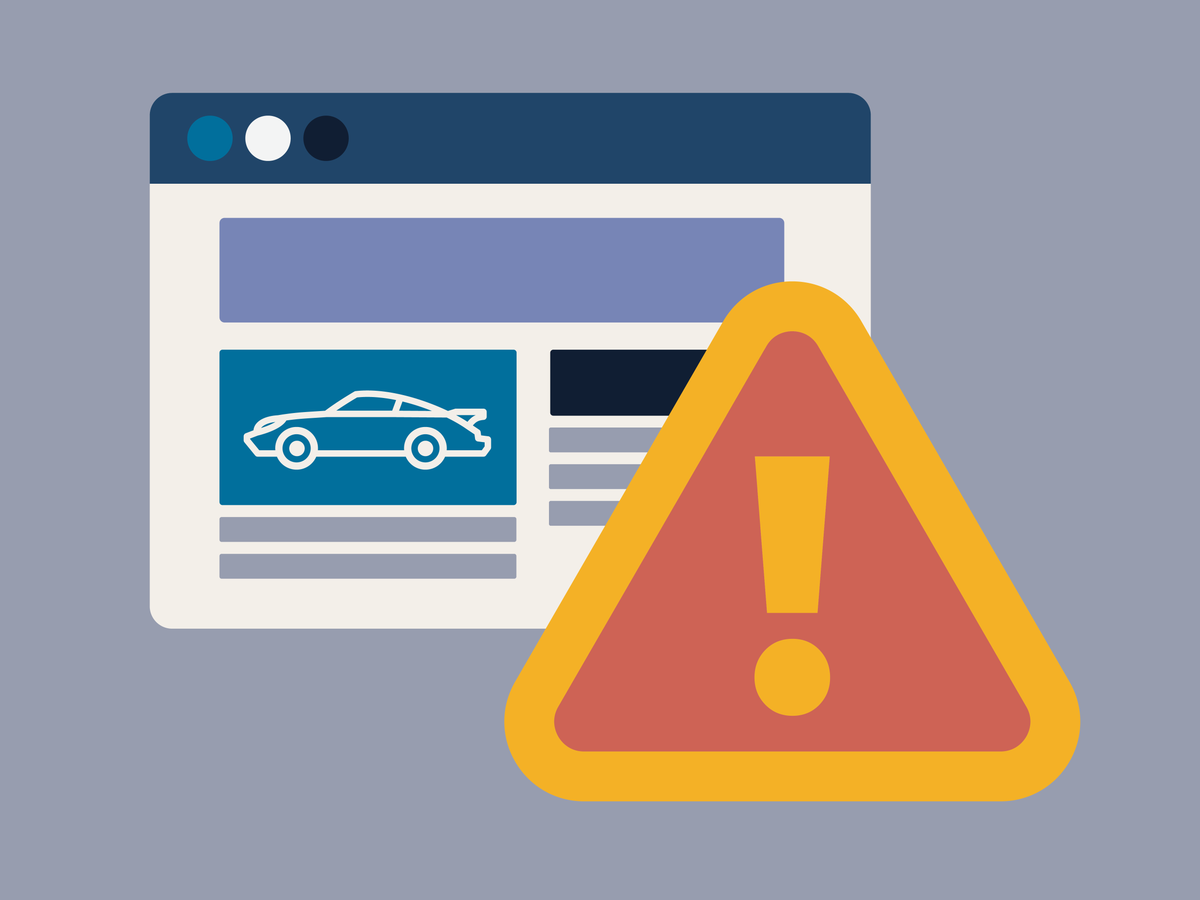
One way for buyers to be protected from title fraud is to meet you at the DMV and register the vehicle right away. This only works if you have your title and aren't selling a vehicle with a loan. If anything is wrong with the paperwork, the DMV won't allow the buyer to register the vehicle, but you can both resolve the issue right away at the DMV.
You probably see the challenge here already: do you meet at the DMV to protect the buyer or do you meet at the bank to protect the seller? You can do both and go together from one location to the other—and many people do exactly that—but it is admittedly inconvenient and time-consuming for both parties.
 Steven Gin
KeySavvy conveniently protects both buyers and sellers
With KeySavvy, sellers can rest assured their payment will be verified and buyers will get a clear title (even if the seller has a loan). Here’s how it works:
- Buyers pay in advance, and we verify their payment is legit.
- At the same time, we verify the seller's ownership of the vehicle and check for liens on the title.
- When buyer and seller meet, we pay the seller after they hand over the keys.
- If the buyer's payment is somehow reversed, it’s on us to collect payment from them, not you.
- You don’t have to meet (and spend hours in line with a relative stranger) at the bank or the DMV.
Most transactions are completed within a day and our fee can be split evenly or paid entirely by you or your buyer.
Conclusion
We get it; no one wants to pay unnecessary fees! It is possible to safely accept payment for your car and offer your buyer peace of mind too, provided:
- You have your title.
- Buyer and seller live in the same area.
- Your bank has a nearby location.
- You have the flexibility to meet your buyer in-person, possibly at multiple locations during the workday, likely at length (banks and DMVs can be slow).
But, if you’re looking for greater security, convenience, and flexibility, check out KeySavvy.
 Steven Gin
 Steven Gin