Blog Home
What is title jumping?
What you need to know about the illegal practice of title jumping and how to avoid it

Buying or selling a used car privately can be a great way to get a better deal than going through a dealership. But private-party transactions also come with risks, especially when paperwork is handled incorrectly.
One of the most common and serious problems is title jumping, also known as open titling or title skipping. It is illegal, exposes buyers and sellers to real liability, and can lead to fines, delays, or worse. This guide explains what title jumping is, why it happens, and how to protect yourself.
What is title jumping?
Title jumping is the illegal act of buying a vehicle without properly transferring the title, then selling it to another person. The buyer leaves the title “open” by not signing or registering it in their own name before reselling the vehicle.
This breaks the legal chain of ownership and allows the intermediate seller to avoid taxes, fees, and regulatory requirements.
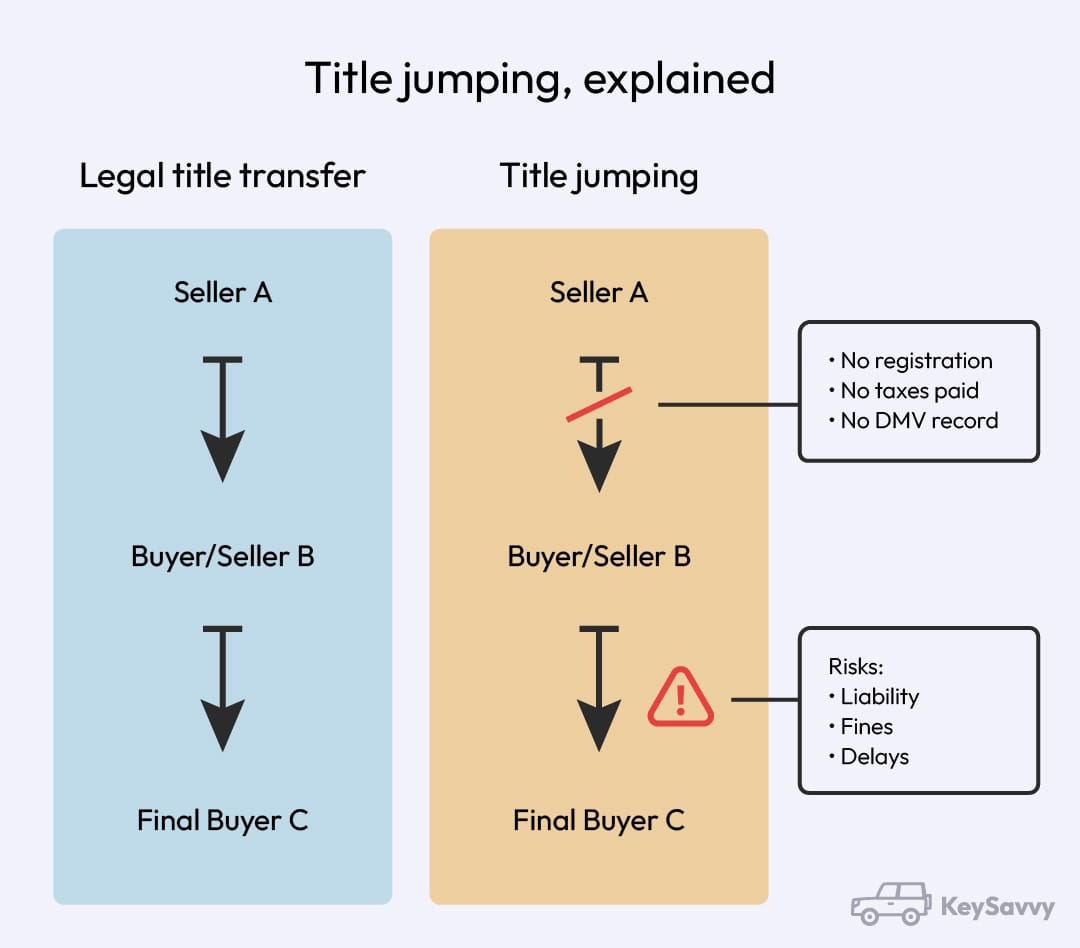
A legal vehicle sale
In a proper transaction, every transfer of ownership is recorded on a new title.
Transaction 1 (A → B) Andre sells a car to Brigitte. Andre signs the seller section of the title. Brigitte signs the buyer section, registers the vehicle at the DMV, and pays applicable taxes and fees. Brigitte receives a new title with their name printed on the front.
Transaction 2 (B → C) Brigitte later sells the car to Carmela. Brigitte signs as the seller, Carmela signs as the buyer, and Carmela registers the car in her name, receiving another new title printed by the DMV.
Each owner receives a new title from the DMV, finalizing the release of interest from the previous seller.
A title jumping scenario
When a title is "jumped" or "skipped", the chain is broken.
Transaction 1 (A → B) Andre sells the car to Brigitte. Andre signs the seller section, but Brigitte leaves the buyer section blank. She does not register the car or pay taxes and immediately offers it for sale.
Transaction 2 (B → C) Brigitte has Carmela sign the buyer section that Brigitte left blank. Carmela then attempts to register the car as if she bought it directly from Andre.
Brigitte’s ownership never appears on the title.
Why do people title jump?
The most common reason is to avoid paying taxes when car flipping. Car flippers buy vehicles with the intent to resell them for profit, often after minor repairs or cosmetic improvements.
While car flipping itself is legal, title jumping is not. By skipping title transfer, flippers attempt to:
- Avoid paying sales tax and registration fees
- Bypass state limits on how many vehicles a private individual can sell
- Sidestep consumer protection requirements imposed on licensed auto dealers
Title jumping is illegal in all U.S. states, though penalties vary by jurisdiction.
Why title jumping is risky
Title jumping creates serious problems for everyone involved.
- Registration problems at the DMV
Buyers who unknowingly purchase an open-title vehicle may face late fees, additional paperwork, or long delays while the DMV investigates. Or their registration may be rejected entirely. Even if the seller cooperates, their name is not on the title, so they cannot help. - State fines
States rely on title transfers to collect taxes and fees. When those are avoided, enforcement action can follow. In other words, states are incentivized to find and impose fines on individuals caught title jumping. - Seller liability
If you sell a car and the title is not assigned to the new buyer, you may still be legally associated with the vehicle. That can expose you to fines or legal scrutiny later. For example, until ownership is officially transferred, tickets, tolls, or accidents may still be traced back to the last recorded owner. - Criminal penalties
In some states, title fraud can result in misdemeanor or felony charges, fines, and possible jail time. - Hidden vehicle history issues
Open titles can obscure liens, odometer records, or branding issues like salvage or flood status, all of which affect value and legality.
How to avoid buying a title-jumped car
Using a service like KeySavvy helps prevent title jumping by verifying ownership and ensuring titles are properly signed before funds are released.
If you are handling a private sale on your own, follow these steps:
- Review the title carefully. All required fields should be completed and signed. Missing information is a red flag.
- Verify the seller’s identity. The name on their ID should match the name on the title.
- Run a vehicle history report through Carfax, AutoCheck, or NMVTIS and make sure you're receiving the most recently issued title.
- Confirm that the VIN on the vehicle matches the VIN on the title.
- Walk away if something feels off. Pressure, unusual explanations, or incomplete paperwork are all valid reasons to stop the transaction.
What to do if you already bought an open-title vehicle
If you discover that you purchased a vehicle with an open title:
- Gather all documentation, including bills of sale, messages with the seller, and copies of any IDs.
- Contact your local DMV and explain the situation. Additional review or investigation may be required.
- In some states, a bonded title may be an option, allowing you to register the vehicle after purchasing what is essentially an insurance policy in case anyone else ever claims ownership of the vehicle.
Key takeaways
- Title jumping is illegal because it can lead to financial losses for buyers and sellers.
- Always confirm that the seller is the titled owner of the vehicle.
- Never complete a sale unless the title is fully and correctly signed. Meeting the seller at the DMV is a great way to ensure the title is transferred successfully.
- When in doubt, slow down or walk away. Clean paperwork protects everyone.