Blog Home
Which states allow registering JDM cars? (and why it’s complicated)
A guide explaining the rules around getting a Japanese Domestic Market vehicle registered in the US.

People often ask which states don’t allow you to register JDM cars. The reality is that very few states ban them outright, but some states make registration far more difficult, expensive, or unpredictable than others. In this guide, you’ll learn about the steps you’ll need to take to get your JDM car registered in various states.
Most U.S. states technically allow registration of JDM vehicles that qualify for the federal 25-year import rule. However, some states restrict specific vehicles—especially kei trucks—and others have emissions or inspection requirements that make registration significantly more difficult.
Are JDM cars legal in the United States?
In most cases, yes—but only if the vehicle is at least 25 years old.
Under U.S. import law, vehicles that are 25 years or older are generally exempt from modern federal safety and emissions standards.
However, legality at the federal import level does not guarantee you can register the car in your state. Each state DMV has its own requirements for emissions testing, VIN inspections, and documentation.
The real question most buyers face is not whether JDM cars are legal in the U.S., but whether they can be successfully titled and registered in their specific state.
Federal rules come first
The first hurdle when importing a foreign vehicle is federal import compliance. If the car does not pass this step, state rules are moot. Note that even if the vehicle has already been successfully imported, you will likely need to present official documentation.
Importers must deal with the following institutions:
- National Highway Traffic Safety Administration (NHTSA)—the federal agency that enforces the Federal Motor Vehicle Safety Standards (FMVSS).
- Environmental Protection Agency (EPA)—maintains pollutant and emissions standards
- U.S. Customs and Border Protection (CBP)—collects customs/import taxes and enforces the above standards.
The 25-year import rule
If the vehicle is over 25 years old (date of manufacture), then it is exempt from FMVSS and EPA regulations at the time of import, but states may still require emissions testing, depending on local laws. This is why the majority of JDM and other foreign vehicles you’ll see for sale in the US are at least 25 years old.
Why states reject JDM registrations
Even if a JDM car passes federal standards during import, it still needs to be registered in your state and that can be challenging.
Emissions requirements
Each state can require its own emission standards and one of the most stringent is the California Air Resources Board (CARB).
VIN format and inspection issues
Because JDM vehicles that are 25 years old do not generally have the same format of Vehicle Identification Numbers (VINs), it can be more difficult to conduct inspections and get accurate vehicle history reports.
Paperwork and title history gaps
One of the most common reasons JDM registrations fail has nothing to do with emissions or safety standards. It has to do with incomplete documentation.
When a vehicle is imported from Japan, several documents are generated along the way:
- Japanese export certificate
- Bill of lading
- CBP entry summary
- EPA Form 3520-1
- DOT Form HS-7
- Any prior U.S. title (if already registered in another state)
If any of these are missing, inconsistent, or improperly translated, the DMV may refuse to issue a title.
Another common issue is a break in the “title chain.” For example:
- The car was imported by one party
- Titled in one state
- Sold without proper reassignment
- Or transferred multiple times without clean documentation
Unlike typical domestic vehicles, JDM imports often do not have clean, standardized title histories. That can trigger extra scrutiny or delays.
DMV discretion and inconsistent enforcement
Even when the law appears clear, enforcement can vary significantly by state, and sometimes even by office.
Most DMV systems were designed around 17-character VINs that comply with modern U.S. standards. Many older JDM vehicles have shorter chassis numbers that do not fit neatly into these systems. When that happens, the application may require manual review.
In practice, this means:
- One DMV office may process the paperwork without issue
- Another may escalate it for additional verification
- A third may reject it outright pending more documentation
Additionally, some states require physical VIN inspections by state police or highway patrol officers. If the officer is unfamiliar with imported vehicles, the process can become more complicated.
This is why two owners in the same state, registering the same model vehicle, can have very different experiences.
The inconsistency is not necessarily because the vehicle is illegal, but because of the way unfamiliar or nonstandard imports are handled in large administrative systems.
Recent policy shifts, AAMVA guidelines, and kei trucks
Another reason it is complicated knowing whether registration is possible in a particular state is that policies change and enforcement of those policies rolls out unevenly.
At the time of writing, the rules have been in flux in a number of states, particularly for one popular category of JDM vehicle: kei trucks.
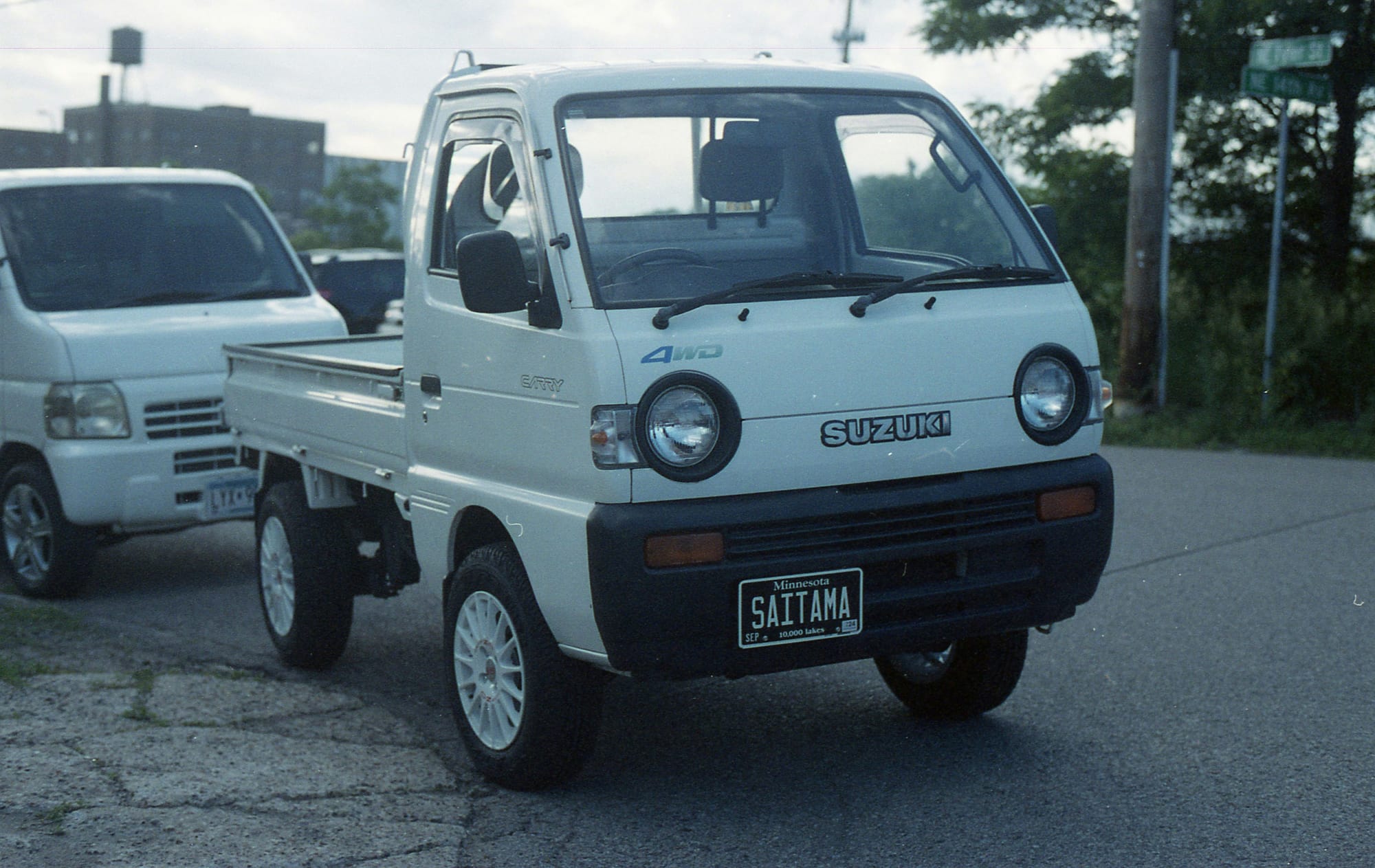
In 2021, the American Association of Motor Vehicle Administrators (AAMVA) published guidelines that recommend states classify all mini-trucks (even if over 25 years old) as off-road vehicles. Several state DMVs subsequently started banning registrations for kei trucks or restricting them to limited speeds.
Note: The AAMVA is not a regulatory agency, but its guidance often influences how state DMVs interpret vehicle eligibility.
In some states where kei trucks have been restricted, enthusiasts report that DMV scrutiny of other JDM vehicles has also increased.
Since then, a number of those states have reversed the bans or restrictions, largely in response to legal challenges and lobbying by enthusiast groups. Not all these reversals have yet taken effect.
If you are looking to register a kei truck in the US, the situation is far more limited than other categories of JDM vehicles, but it's also in flux, so check with your DMV to make sure it's possible before you buy. The World Population Review also maintains a very helpful list.
Off-road use and private property
Even in states where kei trucks or other JDM vehicles cannot be registered for road use, they are often still legal to own and operate on private property or off-road areas.
Many DMVs classify these vehicles as off-road utility vehicles rather than passenger vehicles, which means they may be used on farms, ranches, construction sites, tracks, or private land. In some states they can also be registered as off-highway vehicles (OHVs) for limited recreational use.
However, these classifications do not allow normal street driving, and enforcement varies by jurisdiction. If you are purchasing a kei truck or imported vehicle primarily for utility or recreational use, it’s still important to verify how your state classifies it before buying.
Where registering JDM vehicles is harder or easier
Banned, restricted, or limited
In a small number of states—including Alaska, Illinois, Maine, Rhode Island, New York, Pennsylvania, Georgia, and Colorado—it has been reported that recent policy changes or administrative guidance have led to restrictions, limitations, or registration challenges for kei trucks and some other JDM vehicles.
Alaska's DMV website explicitly states that JDM vehicles "manufactured after 1981 without FMVSS certification are not eligible for Alaska title or registration." Those "built before 1981 will be reviewed for serviceability for roadway use."
While clear and explicit official information is scarce and changing, it is definitely worth confirming with your DMV before purchasing a JDM vehicle in these states.
Extremely difficult: California
California gets a category all to itself because it is unequivocally the hardest state in which to register a JDM vehicle (other than those with an outright ban). This is because emission standards (CARB) are very stringent and most vehicles designed for foreign markets have not been certified to meet them.
In order to receive a California Board of Automotive Repair (BAR) label that certifies an imported vehicle passes emissions testing, you must have the engine modified or replaced and tested. Only a small number of specialized labs do such work and the process is said to cost $8000–15000 (on top of the price of the vehicle), which is prohibitive for many prospective buyers.
Often difficult: New York, Massachusetts, New Jersey
In these states, it is not impossible to register a JDM vehicle, but you will face significant scrutiny and failure rates are higher. The reasons include:
- Stricter emissions testing programs
- State police VIN inspections
- Higher scrutiny of import paperwork
For instance, New York requires proof that the vehicle is over 25 years old, export certificates from Japan, bill of lading, customs entry forms, proof of insurance along with the application form. You will also be required to prove that the vehicle complies with NYS safety and emissions standards (even though it is exempt from federal ones).
Note that all documents from Japan will need notarized official translation to English.
Generally easier states
- Florida, Texas, Arizona, Washington
- Most Midwestern and Southern states
The states listed above are those that are often cited as the “easiest” to get a JDM vehicle registered at the DMV. In most of these states, you will experience:
- Fewer emissions requirements for older vehicles
- No equivalent to CARB standard
- Simpler VIN inspection processes
While getting title and registration are by no means guaranteed or automatic, it is generally understood to be possible with some strong paperwork and a bit of persistence.
The Montana registration myth (and why it doesn’t help Californians)
Many importers or online forums will lead you to believe that the solution to any JDM registration troubles is to get the car titled and registered in Montana, where scrutiny and environmental regulations are looser and—as a bonus—there is no sales tax. They will tell you that you can simply create an LLC and register the car to the business.
Note that it is illegal to drive a car primarily and permanently in California if it is not registered there. California requires registration within a certain period (usually 20 days) if a resident brings a vehicle into the state for use. While you may be able to avoid penalties for a while, having this liability can cause numerous problems down the line.
What matters more than the state you choose
Instead of trying to find a state that might title a JDM vehicle, consider the following first:
- Complete and accurate import documentation
Missing documents are one of the primary reasons JDM registrations are delayed or denied. Before purchasing, confirm the seller can provide export paperwork, customs forms, and any prior U.S. title. - Clean title chain
Try to get a vehicle history report with the VIN. Look out for questionable gaps, as these can cause delays or problems. - Knowing where the car will actually be used
You must register the vehicle in the state where it will be principally driven.
Reducing transaction risk in higher-value private sales
JDM vehicles are often bought and sold privately, often across state lines. Because documentation can be more complex and values are often higher than typical used cars, buyers and sellers face additional risk.
Before completing a private party transaction:
- Verify the full title chain.
- Confirm import documentation is complete.
- Ensure funds are only released once ownership documentation is secured.
- For higher-value collector vehicles, consider using a secure transaction platform that reduces the risk of fraud and title disputes.
Practical advice before you buy a JDM vehicle
- Ask sellers where the car is currently titled and if they can provide you with all the needed documentation.
- Don’t assume “25 years old” equals easy registration.
- Verify your home state’s emissions and inspection rules before purchase.
- Especially if your state is marked as difficult, make sure your confirm with your DMV that they will consider your vehicle for registration.
- Be wary of sellers or importers that promise to register your car anywhere.
Conclusion
- Few states explicitly ban all JDM cars
- As of this writing, some states are restricting, limiting, or banning registration of JDM cars—notably kei trucks
- Some states have far more exacting standards than others
- California is the hardest, in a category of its own
- In all states, registration success depends on compliance and paperwork
In practice, most states can register qualifying JDM vehicles, but the difficulty varies widely depending on emissions rules, documentation, and how state DMVs interpret import guidelines.
Buying a JDM car privately? Protect yourself.
Many JDM vehicles trade hands outside traditional dealerships. If you’re transferring significant funds to a private seller, make sure:
• The title is valid and transferable
• The VIN matches all import paperwork
• Funds are held securely until documentation is confirmed
Complex and high-value collector transactions deserve more protection than a typical used car purchase.
KeySavvy is designed to provide this type of transaction protection for private vehicle sales.
Note: Information in this article is provided as a general guide and may not reflect the latest changes. Always verify with your state's DMV before purchasing.
 Steven Gin
 Steven Gin