Blog Home
Is it safe to accept cash when selling a car?
How to Accept Payment Safely When Selling a Car: Cash, Counterfeits, and Modern Alternatives
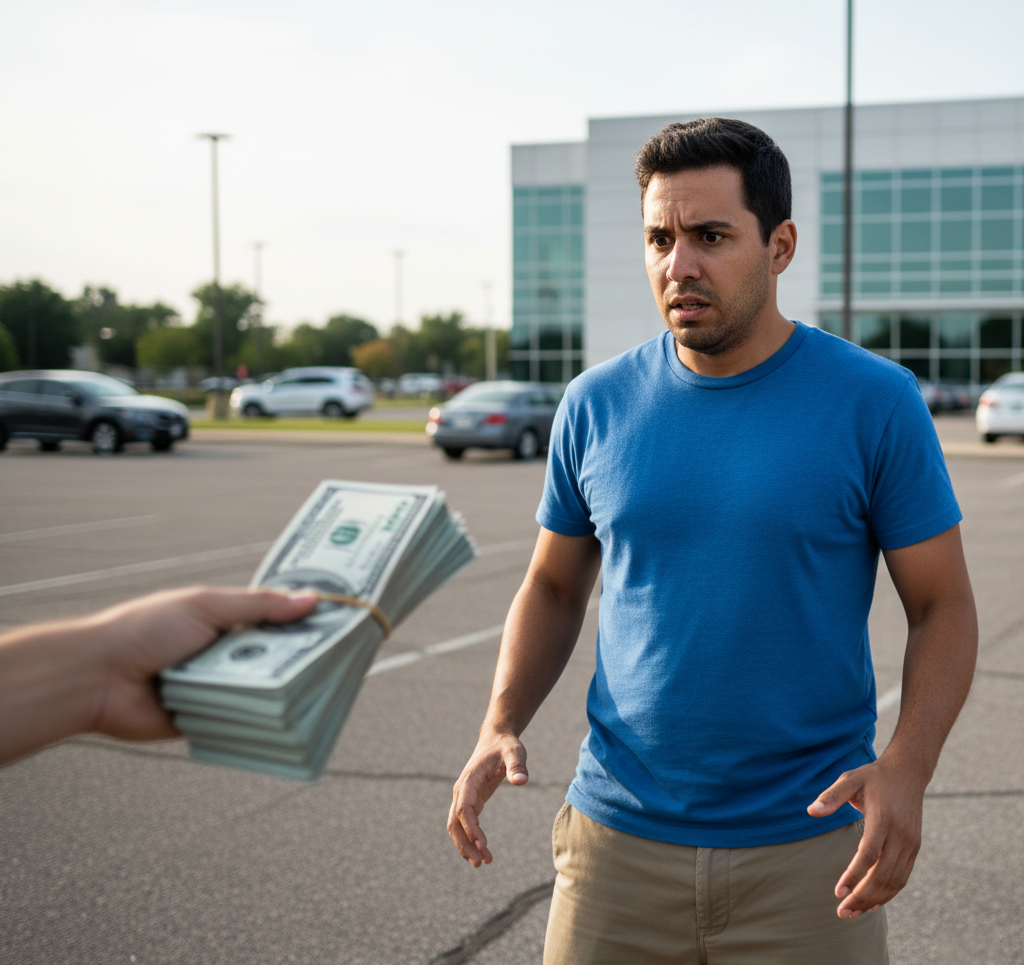
Many private-party sellers assume cash is the safest and simplest way to get paid. The buyer hands you a stack of bills, you hand over the title, and the deal is done. In reality, large amounts of cash create risks and hassles that most people don’t think about until something goes wrong.
It can be safe to accept cash for a car, but only if you take the right precautions.
Why cash is risky
When a vehicle sells for thousands of dollars, two major risks come into play.
Counterfeit bills
Detecting high-quality counterfeits is harder than most people expect.
Counterfeit-detection pens only confirm whether the paper reacts to starch. They do not confirm whether money is real. The Secret Service and U.S. Treasury specifically warn against relying on them. More sophisticated counterfeits can easily pass a pen test, and genuine bills that have been through the wash can trigger a false alert.
Holding the bill up to the light, checking the watermark, or feeling the texture can help, but older bills are easier to fake and still circulate widely. Unless you’re trained, spotting good counterfeit currency is difficult.
Loss or theft
Carrying thousands of dollars of cash is inherently unsafe. Theft can happen in parking lots, inside bank lobbies, or on the walk back to your car.
Loss is also more common than people expect. A stack of $10,000 in hundreds is only about one inch thick and fits in a small envelope. It’s surprisingly easy to misplace it between the meeting and the bank deposit.
Counterfeit risk: rare, but not negligible
You might be wondering how much of a risk there is of counterfeit currency. Here are some data points for your inner actuary.
- The US dollar is the most popular currency for counterfeiters.
- In 2025 the Federal Reserve estimated that there is probably $15 million (1 in 80,000 notes) in counterfeit currency in circulation and up to $30M (1 in 40,000 notes).
- The Federal Reserve Bank of Boston estimates that they receive 20–25 counterfeit bills per day, with the number spiking during the holidays.
- Counterfeit bills vary widely in quality and detectability. Many are printed on inkjets and passed in the middle of a stack. The notorious superdollar (aka superbill or supernote) is a $100 bill that is of very high quality and circulated worldwide since the 80s.
While it may be rare to receive counterfeit cash, when accepting a large payment, the absolute dollar risk is significantly higher. You wouldn’t want to take even a small risk that $20k in cash was fake.
Why cash is inconvenient
Accepting cash usually requires two bank trips: one for the buyer to withdraw the money and another for you to deposit it.
If either party uses an online-only bank, large cash withdrawals or deposits may not be possible at all. And if you can’t meet during banking hours, you’re left waiting with a large amount of cash you don’t want to carry or store.
How to accept cash safely
If a buyer insists on paying cash, the safest method is simple:
Meet at a bank or credit union and have a teller verify the money.
Financial institutions use machines that detect counterfeits automatically. A teller can count the cash, confirm it’s genuine, and immediately deposit it into your account so you don’t have to carry it around afterward.
Best practices:
- Meet at your financial institution, not the buyer’s.
- Only exchange the title after the teller verifies the funds.
- Deposit the money immediately instead of taking it home.
- Avoid after-hours transactions or cash handoffs in parking lots.
- If the buyer refuses to meet at a bank, walk away.
A better alternative to cash
Cash works only during bank hours and only if both parties are comfortable carrying large sums of money. Modern payment verification tools eliminate those limitations.
Services like KeySavvy allow buyers to use any bank, verify funds digitally, and guarantee payment to the seller without handling thousands of dollars in bills. Transactions can be completed evenings and weekends, and the seller never has to worry about counterfeit currency or theft.
 Steven Gin
Conclusion
Cash can be safe when selling a car, but only when exchanged at a bank in front of a teller who verifies the bills and deposits them immediately. Anything less increases the risk of counterfeit money, theft, or loss.
If dealing with bank hours or large amounts of cash feels inconvenient or risky, consider a verified digital payment method like KeySavvy that protects both buyer and seller.
 Steven Gin
Helpful links
- US Currency Education Program
A program for learning about how to authenticate money managed by the Federal Reserve - “How to Detect Counterfeit Money”
An article from Cornell University’s Division of Financial Affairs - Counterfeit Investigations
A site from the US Secret service that details the response to counterfeit money, including instructions on how to report suspected counterfeit money.