Blog Home
A buyer’s checklist for Facebook Marketplace car sales
A practical guide to confirm ownership, avoid title issues, and complete a private party purchase with confidence

Introduction
Buying a vehicle on Facebook Marketplace can offer excellent value, but private party transactions place more responsibility on the buyer. You must verify the seller owns the vehicle, assess the vehicle’s history, and ensure the documents you receive will allow you to register the car without complications.
This guide outlines the four essential items you should obtain from any Facebook Marketplace seller. Each one plays a key role in protecting you from title problems, fraud, and hidden damage.
Quick checklist
You should collect the following from every seller:
- Vehicle Identification Number (VIN)
- Proof of ownership in the seller’s name
- A complete and signed bill of sale
- The vehicle itself in the expected condition
1. Vehicle Identification Number (VIN)
The VIN is the vehicle’s unique identifier. It is publicly visible on the car, and you should obtain it from the seller before meeting in person. The VIN allows you to research the vehicle’s history, confirm ownership records, and check for possible theft or salvage events.
What to do first
Purchase a history report from a reputable provider such as AutoCheck, CARFAX, VinAudit, or Bumper. Review the report for:
- Title brands
- Past accidents or structural damage
- Odometer discrepancies
- Number of previous owners
- Any theft reports through the National Insurance Crime Bureau (NICB)
Use this information to determine whether the vehicle fits your expectations and to help you negotiate a fair price.

When you inspect the vehicle
Confirm that the VIN on the car matches the number provided by the seller. Common locations include:
- A metal plate at the lower corner of the windshield on the driver’s side
- A sticker on the driver’s door jamb
- Stampings on the engine block or frame components in some models
2. Proof of ownership
Verifying ownership is the most important part of a private party sale. If the seller is not the legal owner, you may be unable to register the vehicle. In some cases you could even lose the vehicle later if it is repossessed or claimed by another party.
The title
In a straightforward sale, the seller should provide the original title and a government-issued photo ID. Review both documents carefully.
Check the following items on the title
- VIN: Must match the vehicle.
- Owner names: Should match the seller’s ID. If more than one owner is listed, confirm that all required signatures can be obtained.
- Issue date: Should align with the date shown in your history report. Only the most recently issued title is valid.
- Lienholder section: If a bank or finance company is listed, the lien must be released. This release can appear on the title itself or on a separate lien release document provided by the lender. Learn more about buying a car with a lien.
- Inspect the title for alterations such as scratch-outs or erasures. Most states will not accept a title that shows signs of modification. Ask the seller to obtain a clean replacement title before you proceed.
 Steven Gin
If the seller does not have the title or does not appear on the title
This situation does not always indicate wrongdoing, but it requires additional care. Some common scenarios:
- Outstanding loan: The lender still holds the title until the loan is paid. Request that the seller complete the payoff in a secure, documented manner.
- Business ownership: The title may be in a company’s name. Ask for proof that the seller has authority to sell the vehicle on behalf of the business.
- Trust or estate: The vehicle may belong to a trust or a deceased owner. In these cases the seller must obtain documentation proving their legal authority to transfer the title.
3. Bill of sale
The bill of sale documents the terms of the transaction. Most states require it, and it is an important part of protecting both parties.
A complete bill of sale should include:
- Buyer and seller names and contact information
- Vehicle details: year, make, model, VIN, and odometer reading
- Purchase price and date of sale
- Any included accessories or additional agreements
- Signatures of both parties
You may use your state’s template if available, but a custom or KeySavvy-generated version is acceptable as long as it contains all required elements. Both parties should keep a copy, and you will need yours for DMV registration.
 Steven Gin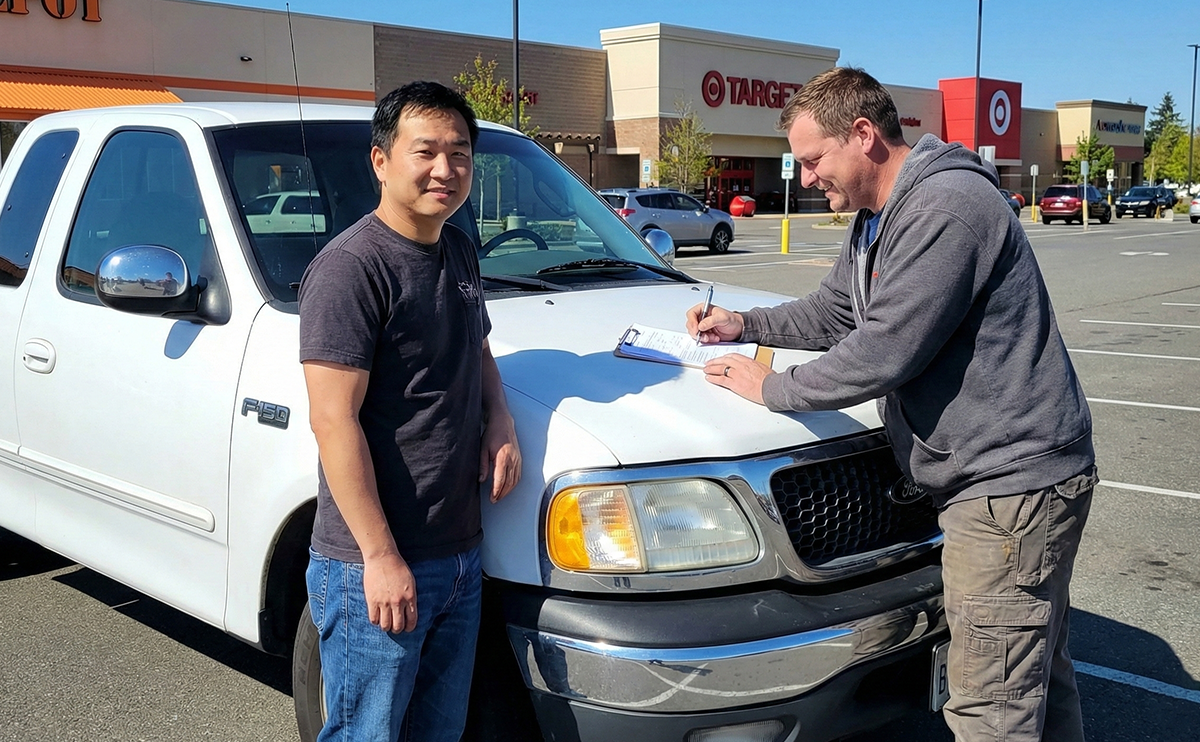
4. The vehicle itself
Before completing the sale, confirm that the vehicle matches the condition described in the listing and the information shown in the history report.
Recommended precautions
- Conduct a thorough in-person inspection.
- Arrange a pre-purchase inspection (PPI) with a qualified mechanic. KeySavvy customers receive discounted rates from LemonSquad (using this affiliate link).
- Test drive the vehicle on local roads and at highway speed.
- Verify the VIN matches the title and bill of sale one final time.
- Only proceed with payment if everything aligns. You should prepare yourself to walk away from the deal at any point if something doesn't look or feel right.
 Steven Gin
Final considerations
Collecting these four items provides clear evidence of ownership, confirms the vehicle’s history, and ensures you have the documentation required to register the car. Facebook Marketplace offers strong value for buyers, but private-party transactions require close attention to detail.
If you want additional protection, you can complete the transaction through KeySavvy. We verify identity and ownership, handle lien payoffs, generate and store the bill of sale, and support complex scenarios such as business-owned or estate-owned vehicles. This allows you to buy confidently and avoid common pitfalls in private party sales.
 Steven Gin
 Steven Gin